Fungal Acne: A Beginner's Guide to Spotting the Difference
Written by Team Neothera | Reviewed By Neothera Medical Panel
If your "acne" refuses to budge no matter what you throw at it, it might not be acne at all.
Fungal acne is a completely different skin condition caused by yeast, not bacteria, and it needs a completely different approach to clear up. Here's the short answer: fungal acne shows up as small, itchy, uniform bumps (usually on the forehead, chest or back), gets worse with oily products, and may not improve with traditional acne treatments and usually requires an antifungal approach. Here’s everything you need to know about how to tell it apart from regular acne and what actually works.
All information here is based on scientific research and reviewed by Neothera's in-house Medical Panel. This isn't a prescriptive treatment plan by any means.
What Is Fungal Acne, Exactly?
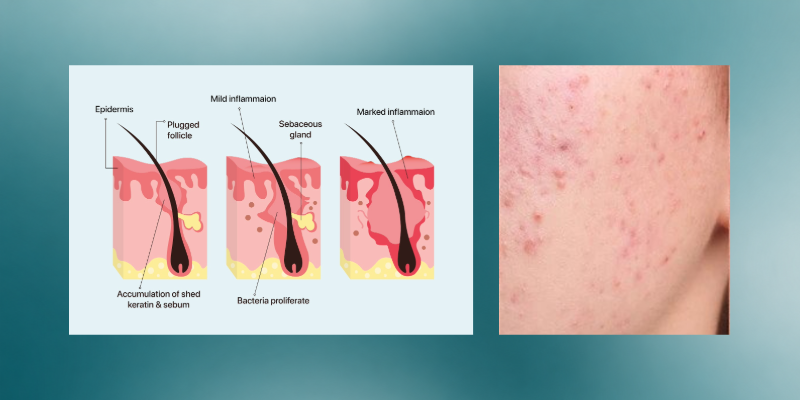
Despite the name, it isn't acne in the traditional sense. It's a condition called Malassezia folliculitis, caused by an overgrowth of a yeast that naturally lives on everyone's skin. When this yeast multiplies inside hair follicles, it triggers small, inflamed, often itchy bumps that look a lot like acne but behave very differently underneath.
This distinction matters because acne vulgaris (regular acne) is driven by clogged pores, excess oil and bacteria, while fungal acne is driven entirely by yeast. Treating one like the other is usually why nothing seems to work.
Bacterial Acne vs Fungal Acne: What's Actually Different
Here's where most people get stuck, because bacterial acne vs fungal acne can look nearly identical at first glance. The differences are in the details:
- Bumps: Bacterial acne varies in size, with blackheads, whiteheads and deeper cysts. Fungal acne is small and remarkably uniform.
- Itch: Bacterial acne is less likely to itch. Fungal acne almost always does.
- Spread pattern: Bacterial acne clusters around the T-zone and jaw. Fungal acne tends to appear in patches, often where skin gets warm and sweaty.
- Response to treatment: Bacterial acne improves with salicylic acid or benzoyl peroxide. Fungal acne may not respond to these because neither ingredient directly targets the yeast.
Where Does Fungal Acne Usually Show Up?
Fungal acne on the face is common, especially fungal acne on the forehead and fungal acne on the cheeks, since both areas produce more oil that the yeast feeds on. It's also frequently seen on the chest, back and shoulders, particularly after workouts or in humid weather, when sweat and trapped moisture create the perfect environment for yeast to thrive.
What Causes Fungal Acne?
A few key triggers show up again and again:
- Heat and humidity, which help the yeast multiply faster
- Heavy, oil-based skincare and hair products that feed it
- Tight or non-breathable clothing that traps sweat against skin
- A recent course of antibiotics, which can throw off the skin's natural microbial balance
- A weakened immune system or excessive sweating
Understanding the causes of fungal acne is half the battle, because most flare-ups are really about the environment your skin is stuck in, not something you're doing wrong.
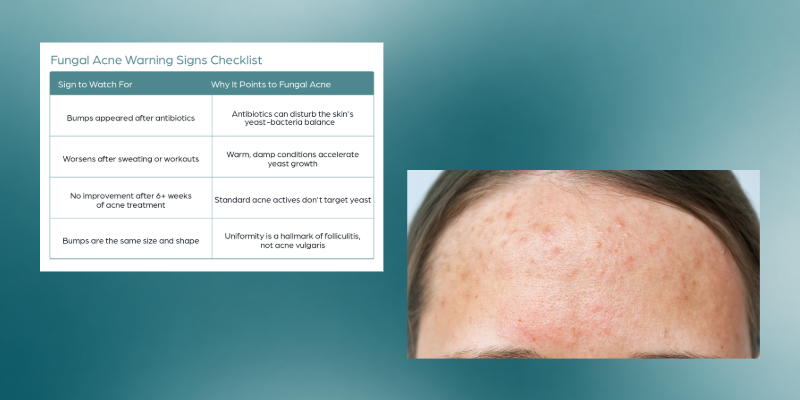
Fungal Acne Quick Self-Check
Before your next dermatologist visit, this table can help you flag the signs worth mentioning:
| Sign to Watch For | Why It Points to Fungal Acne |
|---|---|
| Bumps appeared after antibiotics | Antibiotics can disturb the skin's yeast-bacteria balance |
| Worsens after sweating or workouts | Warm, damp conditions accelerate yeast growth |
| No improvement after 6+ weeks of acne treatment | Standard acne actives don't target yeast |
| Bumps are the same size and shape | Uniformity is a hallmark of folliculitis, not acne vulgaris |
How to Get Rid of Fungal Acne
The honest answer for how to get rid of fungal acne is that it needs an antifungal ingredient, such as ketoconazole or zinc pyrithione, ideally confirmed and prescribed by a dermatologist first, since misdiagnosing it wastes months. One clinical study found that nearly 29% of patients clinically diagnosed with acne vulgaris also had Malassezia folliculitis, showing how easily the two conditions can be confused or coexist, which shows just how often the two get mixed up.
While you sort out the fungal side with proper antifungal treatment, your routine still needs to avoid feeding the problem further. This is where fungal acne safe products matter. The Purify + Control | Acne Cleanser is oil-free and non-comedogenic, so it won't add fuel to yeast overgrowth while cleansing away sweat and grime.
If your breakouts have been sticking around despite doing everything "right," it's worth getting your actual root cause mapped out properly through the 8-Week Acne System, rather than guessing between fungal and bacterial causes on your own. And if bacterial acne is also part of your picture, our guide on salicylic acid for acne breaks down when that ingredient actually helps.
FAQs on Fungal Acne
Can fungal acne go away on its own?
Not usually. Fungal acne is caused by yeast overgrowth, so it typically requires antifungal ingredients plus a consistent skincare routine to treat the root cause and reduce flare-ups.
Is fungal acne contagious?
No. The yeast that causes it already lives on everyone's skin, so it isn't spread from person to person.
Does diet affect fungal acne?
Not directly. Unlike hormonal acne, fungal acne is driven by environment and skin conditions, not food.
Can makeup cause fungal acne?
Heavy, oil-based makeup can worsen it, so lightweight, oil-free formulas are a safer choice while treating a flare-up.
How long does fungal acne take to clear with proper treatment?
Most people see visible improvement within 2 to 4 weeks of consistent antifungal treatment, though full clearance can take longer.