
Article: Salicylic Acid for Acne: A Dermatologist-Approved Cleanser Guide
Salicylic Acid for Acne: A Dermatologist-Approved Cleanser Guide
Written by Radhika Agarwal
Salicylic acid acne treatment has become one of the most recommended (and most searched) solutions for breakouts, showing up everywhere from dermatologist clinics to drugstore ads. Yet not everyone who tries a salicylic acid cleanser sees the results they expect - some experience dryness, irritation, or no real change at all. The difference usually comes down to three things: the formulation, the condition of the skin it's applied to, and the routine it's used in.
This guide is based on scientific research and reviewed by Neothera's in-house board-certified dermatologist. It isn't a prescriptive treatment plan, since acne care depends on individual skin context - anyone dealing with persistent or severe acne should consult a dermatologist before introducing potent actives.
Is Salicylic Acid Good for Acne?
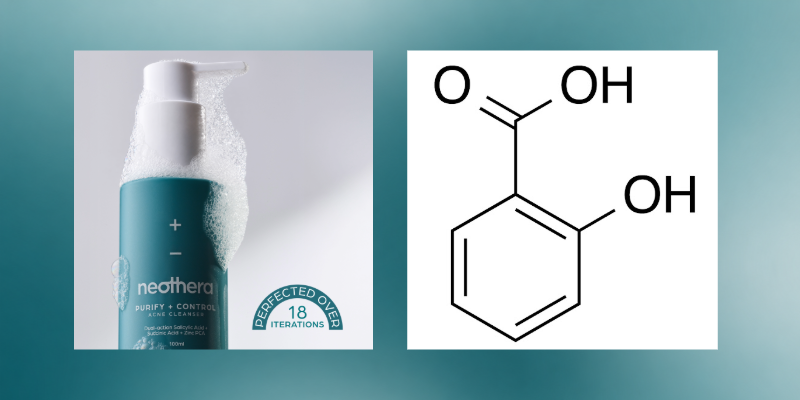
For most people with acne-prone skin, yes. Salicylic acid is a BHA (beta-hydroxy acid), meaning it's oil-soluble rather than water-soluble, unlike AHAs such like glycolic or lactic acid. A clogged pore behaves like a drain blocked with sebum, dirt, and dead skin - a water-based cleanser can only clean the surface, while an oil-soluble active like salicylic acid cuts through and dissolves the blockage from within.
That said, anyone with a compromised skin barrier, highly sensitive skin, or a known allergy should check with a dermatologist first. Current clinical guidance considers low-dose topical salicylic acid acceptable during pregnancy and breastfeeding, though confirming with an OB-GYN is still advisable.
How Salicylic Acid Works on Acne
Beyond unclogging pores, salicylic acid helps calm redness, evens out skin texture over time, and prevents new acne by stopping blockages before they form.
The Short Contact Therapy Method
Dermatologists often recommend leaving a salicylic acid cleanser on for about 60 seconds before rinsing. This "short contact therapy" approach maximizes efficacy while minimizing the risk of dryness or irritation.
How to Use Salicylic Acid for Acne the Right Way
A few rules make a real difference:
-
Leave the cleanser on for 60 seconds before rinsing
-
Follow with a non-comedogenic moisturizer - skipping this step can trigger rebound oiliness
-
Wear SPF 50+ daily, since post-acne marks darken quickly on Indian skin tones without UV protection
-
Avoid use on broken, bleeding, or actively inflamed skin
-
Don't stack it with other exfoliants (like an AHA toner) in the same routine
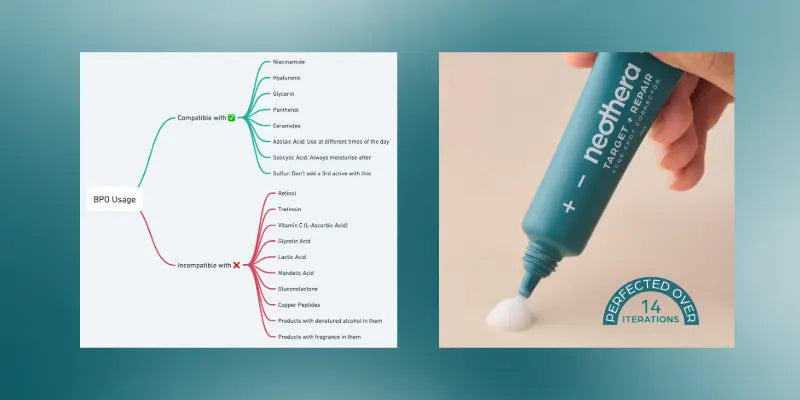
Cleansers also rinse off, taking their active ingredients with them. A cleanser alone usually isn't enough for persistent acne - pairing it with a leave-on treatment makes a bigger difference.
Salicylic Acid Cream, Gel, Serum, or Ointment - Which Format Works Best?
Salicylic acid shows up in several forms - salicylic acid cream for acne, salicylic acid gel for acne, salicylic acid serum for acne, salicylic acid ointment for acne, and salicylic acid cleanser - each of which behaves differently. A serum or gel stays on the skin longer, making it more effective for spot-treating active breakouts. A cream or ointment is often used for thicker, targeted application. A cleanser, by contrast, is rinsed off within a minute, making it a preventive step rather than a stand-alone treatment.
What's the Best Salicylic Acid for Acne - and the Right Concentration?
Concentration matters, but so does what's formulated around it. A well-made cleanser typically pairs salicylic acid with:
- Zinc PCA: regulates sebum, fights acne-causing bacteria, and calms inflammation
- A mild surfactant system: harsh surfactants like SLS dry out and irritate acne-prone skin, while gentler options like cocamidopropyl betaine cleanse without disrupting the skin's natural pH
- No added fragrance: fragrance adds irritation risk without improving efficacy
Why Are Salicylic Acid Cleansers So Thin and Watery?
Salicylic acid doesn't dissolve well in water, so formulating it without harsh solvents often results in a thinner, runnier texture. A thicker gel-like consistency would need either bulking agents (no added benefit) or stronger solvents (more irritation) - making the watery texture is a formulation choice, not a flaw.
Free-Form vs. Encapsulated Salicylic Acid - Which Lasts Longer?
Encapsulated salicylic acid is packed into tiny polymer spheres that stick inside the pore and release the active gradually, even after rinsing. Free-form salicylic acid acts immediately but loses its effect once rinsed off. Most cleansers use only the free form since it's cheaper to formulate, but the most effective ones combine both for immediate and sustained action.
What Makes Neothera's Purify + Control Cleanser Different
Most salicylic acid cleansers settle for one or two of the formulation markers covered above. Purify + Control combines free-form and encapsulated salicylic acid for both immediate and sustained action, alongside Zinc PCA and a mild surfactant base - without added fragrance. It's formulated to fit directly into a short-contact routine, making it suitable for daily use on acne-prone, sensitive skin.
The Takeaway
A salicylic acid cleanser can be a strong addition to an acne-prone routine, but concentration alone doesn't determine whether it's worth using. The surfactant system, pH, and full formulation matter just as much. No cleanser, however well-formulated, replaces the need to address what's actually triggering the acne.
FAQs on Salicylic Acid Cleansers For Acne
Does salicylic acid remove acne scars?
It mainly helps prevent new breakouts and fade surface-level marks through gentle exfoliation.
Can salicylic acid help with acne marks?
Yes - by speeding up cell turnover and preventing new blockages, it can help marks fade somewhat faster, though results vary by skin type.
How often should a salicylic acid cleanser be used?
Commonly once daily, often in the PM routine, with short contact (around 60 seconds) for optimal efficacy. Frequency should be adjusted to individual tolerance.
Can pregnant or breastfeeding women use salicylic acid?
Low-dose topical salicylic acid is generally considered acceptable, but confirming with an OB-GYN beforehand is recommended.
Neothera's 8-week system is designed with dermatologists, nutritionists, and R&D experts. Neo by Neothera, is a 24x7 companion, that lives in your WhatsApp to answer any questions you have and give real-time insights.
%20solutions%20for%20breakouts,%20showing%20up%20everywhere%20from%20dermatologist%20clinics%20to%20drugstore%20ads.%20Yet%20not%20everyone...)