Does Dairy Cause Acne? The Truth About Foods That Cause Breakouts
Written by Hemalatha Anirudh
If you've spent time on skincare forums, you've probably seen someone claim that cutting out milk cleared their skin overnight. But science tells a more nuanced story. Dairy and acne do have a documented link, but dairy is not a universal trigger. Whether it's one of the foods that cause acne for you specifically depends on your individual biology, and this guide helps figure that out.
All information here is based on scientific research and co-authored with Hema, a certified nutritionist - a part of Neothera’s Medical Panel. This isn't a prescriptive treatment plan by any means.
Is Dairy Really a Food That Causes Acne?
Do dairy products cause acne? Current research says: it depends. A 2018 meta-analysis found that people who consumed dairy were about 25% more likely to have acne, with skimmed and low-fat milk showing the strongest pattern. So while dairy products and acne have a real, researched connection, it doesn't mean every person who drinks milk will break out.
Does dairy cause acne in your case specifically? That's a question an elimination trial can answer far better than guesswork.
How Do Dairy Products Cause Acne? The Science Behind It

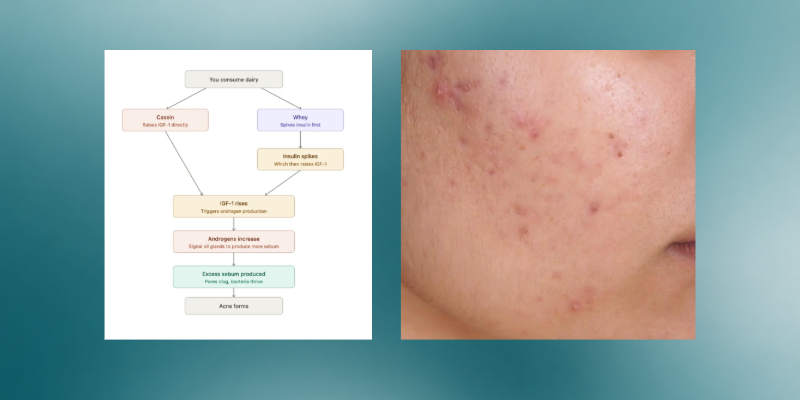
Milk contains two proteins: casein (about 80%) and whey (about 20%). When consumed, these proteins trigger a chain reaction that explains how dairy causes acne at a biological level.
Casein raises IGF-1, a hormone that signals skin cells to grow and oil glands to produce more sebum. Whey spikes insulin, which in turn also increases IGF-1. The elevated IGF-1 then triggers androgen activity, and androgens are the hormones that tell the skin to produce oil. More oil means more clogged pores, and more clogged pores means acne breakouts.
Does the Type of Dairy Matter?
Yes, because different forms of dairy contain varying fat and protein content, making some more problematic than others.
Contrary to popular belief, skimmed milk appears to be more acne-triggering than whole milk. When fat is removed, the remaining liquid retains a higher concentration of proteins and sugar, which drive the insulin spike. Whole milk, low-fat milk, and regular milk have all shown a positive link with acne breakouts in research.
Fermented dairy like curd and buttermilk may behave differently for some people. The fermentation process alters some of the proteins, which is why dermatologists often recommend reintroducing these first during an elimination trial. Evidence here is still evolving, but it's a useful practical distinction.
The List of Foods That Cause Acne: What to Remove During a Dairy Trial

Foods that cause acne in adults aren't limited to obvious sources. When doing a dairy elimination, the following all need to come off the plate temporarily:
-
All forms of milk (whole, skimmed, low-fat, toned)
-
Fermented dairy (curd, buttermilk, yogurt)
-
Solid dairy (cheese, paneer, butter, ghee)
-
Hidden sources: protein bars, milk-based coffee drinks, baked goods, whey protein supplements
Keeping a food diary during this period matters. Sleep and stress also affect the skin, so logging all three gives cleaner data on what's actually driving any changes.
Foods That Cause Acne and Pimples: Not Just Dairy
Does dairy trigger acne - that’s the central question here. It's worth noting that dairy isn't the only item on the list of foods that cause acne. Sugar and refined carbohydrates spike insulin on their own, which is why plant-based milk alternatives like oat milk or sweetened almond milk aren't automatically safe swaps. Foods that cause acne and pimples often share one common thread: they drive insulin and IGF-1 spikes, which increase oil production and inflammation.
Foods that can cause acne worth watching beyond dairy include - high-glycaemic foods, processed snacks, and sugary drinks. For foods that cause acne in adults specifically, the gut-skin connection and individual food intolerances play a larger role than they do in teenage acne, which is more purely hormonal.
How to Run a Dairy Elimination Trial
An elimination diet is one of the most practical tools in both dermatology and nutrition because it generates personalised data about your own skin. Here's how it typically works:
Weeks 1 to 4: Remove All Dairy
Cut out all dairy completely, including hidden sources. Log food, sleep, and stress levels daily.
Week 4: Assess
Compare skin at week four with week one. Look for changes in oiliness, active breakouts, and redness. If nothing has changed, dairy is likely not a trigger. If there's visible improvement, move to the next step.
Week 5 Onwards: Reintroduce Gradually
Start with fermented dairy (curd, buttermilk) since these are least likely to cause a reaction. Wait a few days and observe. Then move to cheese and paneer, leaving milk for last. If a reintroduced food triggers a flare, remove it again for 3 to 6 months before trying again.
The reintroduction phase is where the real answer shows up. It identifies exactly which dairy products to avoid for acne in each individual case, rather than cutting everything out indefinitely.
Cutting Dairy Doesn't Mean Compromising on Nutrition
Eliminating dairy, especially for vegetarians who rely on it for protein, calcium, and B12, doesn't have to mean nutritional gaps. There are solid alternatives across each category:
-
Protein: tofu, tempeh, edamame, soybeans, soya chunks, plant protein powders
-
Calcium: chia seeds, fortified plant milk, sunflower seeds, chickpeas, sesame seeds, broccoli, leafy greens
One thing to watch: oat milk and some almond milks contain added sugars. Since sugar is itself one of the foods that cause acne breakouts, reading labels before swapping is important.
Neothera's Clear + Balance | Acne Nutrition Support is designed to complement dietary changes like these, supporting the internal factors that drive acne from within.
The Bottom Line on Dairy and Acne
Dairy acne (acne triggered by dairy consumption) is real for some people and completely irrelevant for others. The goal isn't to eliminate dairy based on fear or trends. It's to find out, through a structured and science-first elimination trial, whether dairy products cause acne for you specifically, and if so, which type is the actual culprit.
Consistency and data will give the answer. Panic won't.
FAQs
Do dairy products cause acne?
Research shows a correlation between dairy consumption and acne, with people who consume dairy being about 25% more likely to develop acne. However, dairy products and acne aren't universally linked. Whether dairy triggers breakouts depends on individual biology.
What foods cause acne and pimples in adults?
Foods that cause acne in adults commonly include high-glycaemic foods, sugary drinks, processed snacks, and dairy for those who are sensitive to it. The common thread across foods that cause acne breakouts is their ability to spike insulin and IGF-1, which increases oil production.
Which dairy products to avoid for acne?
Skimmed and low-fat milk appear to be the most problematic. Fermented dairy like curd and buttermilk tends to be better tolerated. A structured elimination trial is the most reliable way to identify which specific dairy products to avoid for acne in each individual case.
Does dairy trigger acne even if I'm not lactose intolerant?
Yes. The acne link is driven by dairy proteins (casein and whey) and their effect on insulin and IGF-1, not by lactose digestion.
Are there healthy foods that cause acne?
Some foods considered healthy can still drive acne in sensitive individuals. Oat milk with added sugar, high-glycaemic fruits in large quantities, and whey protein supplements are examples of foods that can cause acne despite being perceived as healthy choices.
Can dairy worsen hormonal acne?
Dairy-linked acne is caused by the way dairy proteins stimulate IGF-1 and androgen activity, mimicking the hormonal environment that causes hormonal acne flares. This is why some people notice that dairy makes their hormonal breakouts worse.
Why do some people consume dairy regularly without breakouts while others notice their acne worsening?
Dairy does not affect everyone’s skin in the same way. Individual responses may depend on a person’s underlying susceptibility to acne, hormonal and insulin–IGF-1 signalling, their overall diet, and the type and quantity of dairy consumed.
Milk and whey may increase insulin and IGF-1-related signalling, which can contribute to oil production and inflammation in some acne-prone individuals. However, the evidence largely shows an association, and dairy is not an acne trigger for everyone.