Article: A Guide to Pore Clogging: What's Really Behind It

A Guide to Pore Clogging: What's Really Behind It
Written by Team Neothera | Reviewed by Neothera Medical Panel
Your pores don't clog overnight, and they don't clear overnight either. In short, pore clogging happens when oil, dead skin cells and daily buildup get trapped inside a pore faster than your skin can naturally clear it out. Once you understand what's actually causing it, fixing it becomes far less confusing.
What's Actually Happening Beneath the Surface

Graphic from Acne vulgaris: A review of the pathophysiology, treatment, and recent nanotechnology based advances.
The “pore” is simply the opening you see at the skin’s surface. It’s basically a part of the hair follicle, which is connected to an oil-producing sebaceous gland. Sebum normally travels through this follicle and out through the pore opening, helping keep the skin soft and supported. This helps lubricate your skin and maintain its barrier health.
Congestion begins when skin cells inside the follicle don’t shed as efficiently as they should. They start accumulating and mix with sebum. This gradually forms a plug within the follicle. This build-up can begin beneath the surface before it becomes visible as a blackhead, whitehead or breakout.
Ingredients Worth Double-Checking
| Ingredient | Commonly Found In |
|---|---|
| Coconut oil | Moisturisers, cleansing balms |
| Isopropyl myristate | Lotions, sunscreens |
| Cocoa butter | Body creams, occasionally face balms |
| Algae extract | Marine-based skincare, masks |
| Wheat germ oil | Natural oil blends, serums |
Not every "skin-friendly" product is actually pore-friendly. Some ingredients, even natural ones, are more likely to sit inside pores rather than absorb properly, which is worth knowing if you're hunting for the best non-pore-clogging moisturizer or building a routine for congested pores.
Note: Always look for a non-comedogenic marker and the associated clinical study it was quoted in. Evaluating ingredients for their comedogenicity is helpful but it isn’t the gold standard. The final formula defines whether it will clog your pores or not.
Ingredients to look out for
| Barrier Supporting | Exfoliating and Oil Control |
|---|---|
| Hyaluronic Acid | Zinc PCA |
| Squalane | Salicylic Acid |
| Panthenol | Succinic Acid |
| Glycerin | |
| Ceramides |
Note: Balancing exfoliation and oil control with barrier-supporting ingredients helps manage excess oil and buildup without compromising the skin barrier.
Building a Routine That Won't Work Against You
Skincare for clogged pores doesn't need to be complicated, honestly a mix of using the right exfoliating formulations, in the right concentrations paired with non-comedogenic barrier repairing formulas.
Most people heavily exfoliate their skin with harsh chemical exfoliants without supporting the barrier. This in turn causes the skin to break out more than before. Here’s what you should be doing instead:

Step 1: Remove makeup and sunscreen
If you wear makeup or heavy sunscreen, start with micellar water to help remove surface makeup, sunscreen and buildup. This gives your cleanser a cleaner base to work on.
Step 2: Cleanse with a pore-clearing formula
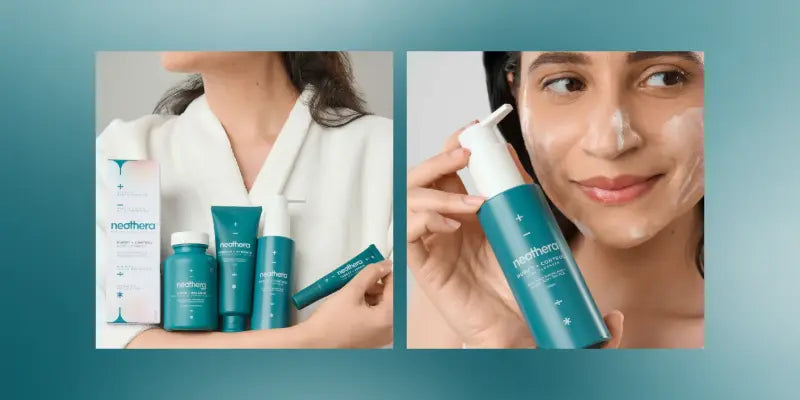
Follow with Purify + Control | Acne Cleanser, formulated with Salicylic Acid, Succinic Acid and Zinc PCA to help clear pore buildup and manage excess oil without unnecessarily stripping the skin.
Step 3: Restore hydration and support the barrier
Following cleansing with a formula that hydrates without adding to the problem matters just as much as the cleanse itself. The Rebuild + Hydrate | Weightless Moisturizer provides lightweight hydration and supports the skin barrier without feeling heavy on congestion-prone skin. It is also non-comedogenic and has been clinically evaluated in 30 subjects with acne-prone, combination-to-oily skin and facial comedones, making it a suitable option when you want to maintain hydration without adding to the concern you’re trying to manage.
Step 4: Target active breakouts
If you have active acne, use Target + Repair | Acne Spot Corrector as a targeted treatment rather than applying it all over your face. Its acne-focused formula helps target individual breakouts while Hyaluronic Acid provides hydration. Apply a thin layer directly to active spots as directed, then follow with your moisturizer.
The key is balance: use pore-clearing and acne-targeting actives where they are needed, while giving your skin the hydration and barrier support it needs to stay comfortable.
Habits That Quietly Undo Your Routine
Even a solid routine can be sabotaged by small daily habits. Touching your face throughout the day transfers oil and bacteria straight onto skin, dirty pillowcases redeposit buildup every night, and switching between too many actives at once can overwhelm skin rather than clearing it. None of these show up immediately, which is exactly why they're so easy to overlook.
If breakouts and congestion keep circling back no matter what you try, it's often less about any single product and more about an underlying pattern worth investigating properly. The 8-Week Acne System is built to identify exactly that kind of recurring root cause rather than treating symptoms one at a time.
FAQs on Pore Clogging
Is congested skin the same as having acne?
Not exactly - though there is a lot of overlap. Congested skin is often used to usually describe the condition where the follicle is blocked by sebum and dead skin cells. These can appear as blackheads, whiteheads or tiny bumps on the surface.
Can drinking more water unclog pores?
Hydration supports overall skin health, but it doesn't directly clear existing buildup inside a pore. Topical care and consistent cleansing address the actual blockage far more directly. Purify + Control | Acne Cleanser contains ingredients like Salicylic Acid help clear excess oil, dead skin cells and build up.
How long does it take to see improvement?
Most people notice a smoother texture and fewer new bumps within four to six weeks of a consistent, appropriately gentle routine. Using an exfoliating cleanser alongside a non-comedogenic moisturiser can help manage pore buildup while supporting the skin barrier as skin cell turnover naturally takes time to show visible results.
Are clogged pores more common in certain climates?
Yes, humid environments tend to increase oil production and sweat, which speeds up how quickly buildup accumulates inside pores compared to drier climates.